Neoclassicism

Developing alongside the Enlightenment’s emphasis on intellect and reason, Neoclassicism was particularly embraced in revolutionary France and the early United States where political upheaval and social unrest found consolation in the virtuosity, sacrifice, patriotism and self-control believed to have been modelled by Greco-Roman civilisations. Archaeological discoveries at Herculaneum and Pompeii, and widely circulated engravings of classical sculpture and scholarly texts provided artists with concrete visual and theoretical references to reshape painting, sculpture, architecture and the decorative arts, aligning them with Enlightenment values.

Seeking the perceived timelessness of ancient antiquity, the symbolic language of Neoclassicism rejected the ornamental excess and emotional volatility of Baroque and Rococo aesthetics, instead turning to classical mythology and allegorical narratives. Clarity of form, harmonious proportions and tightly controlled compositions were privileged over dramatic effects; surfaces were smooth and polished, suppressing the visible brushwork or tool marks of the artist to suggest permanence and intellectual rigour. Whether in painting or sculpture, Neoclassical works aimed to instruct as much as to please, aligning art with ethical improvement and public virtue.
By the nineteenth century, Neoclassicism had become a global artistic language, shaped by transnational exchange and shifting political realities. Young, wealthy men had begun undertaking the ‘Grand Tour’, travelling to Rome to study antiquities first-hand, then continuing on through other parts of western Europe before attending one of many academies where classical training was promoted as the foundation necessary to achieve true artistic excellence.

Nevertheless, the movement was never static nor monolithic, but evolved in response to Romanticism and social change, sometimes adopting greater emotional depth or addressing contemporary themes through classical form. Due to this, the apparent simplicity of Neoclassical works often conceals complex negotiations between tradition and innovation, ideal and reality, and, most notably, a sustained effort to define the role of art in shaping the moral, civic and cultural values of a time.
Neoclassicism’s enduring appeal lies in its dual orientation toward past and present. By invoking antiquity, artists sought permanence, universality and ethical clarity, and through their reinterpretation classical forms, they addressed the intellectual and political urgencies of their own time. This tension between historical reference and modern meaning gave the movement both coherence and flexibility, allowing it to remain relevant across decades and cultures.
Neoclassical women

Angelica Kauffman
(Switzerland, 30/10/1741 - 05/11/1807)
Period: Eighteenth and Nineteenth century
Movement: Neoclassicism
Medium: Painting

Adélaïde Labille-Guiard
(France, 11/04/1749 - 24/04/1803)
Period: Eighteenth and Nineteenth century
Movement: Neoclassicism
Medium: Painting

Edmonia Lewis
(United States of America, 04/07/1844 - 17/09/1907)
Period: Nineteenth and Twentieth century
Movement: Neoclassicism
Medium: Painting

Constance Mayer
(France, 09/03/1774 - 26/05/1821)
Period: Eighteenth and Nineteenth century
Movement: Neoclassicism
Medium: Painting

Catherine Read
(Scotland, 03/02/1723 - 15/12/1778)
Period: Eighteenth century
Movement: Neoclassicism
Medium: Painting
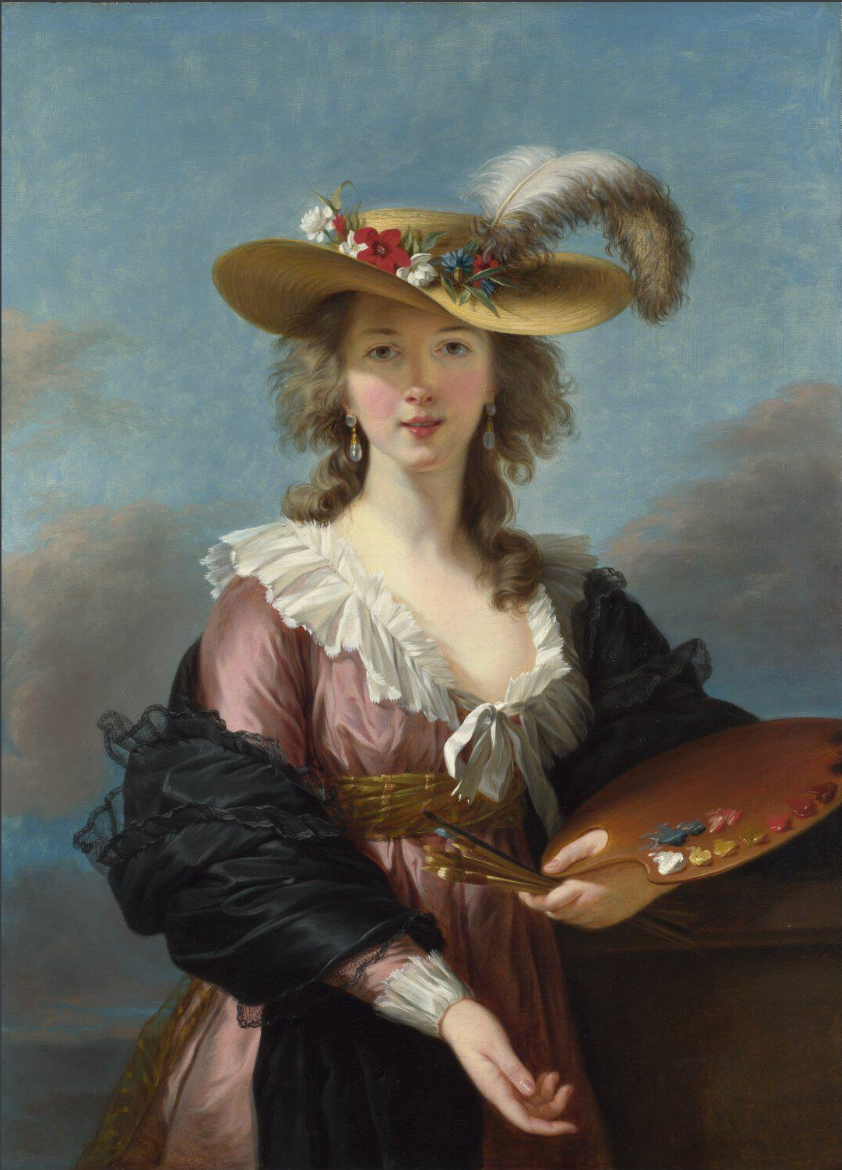
Elisabeth Vigée Lebrun
(France, 16/04/1755 - 30/03/1842)
Period: Eighteenth and Nineteenth century
Movement: Rococo, Neoclassicism
Medium: Painting

Marie-Denise Villers
(France, 1774 - 19/08/1821)
Period: Eighteenth and Nineteenth century
Movement: Neoclassicism
Medium: Painting


